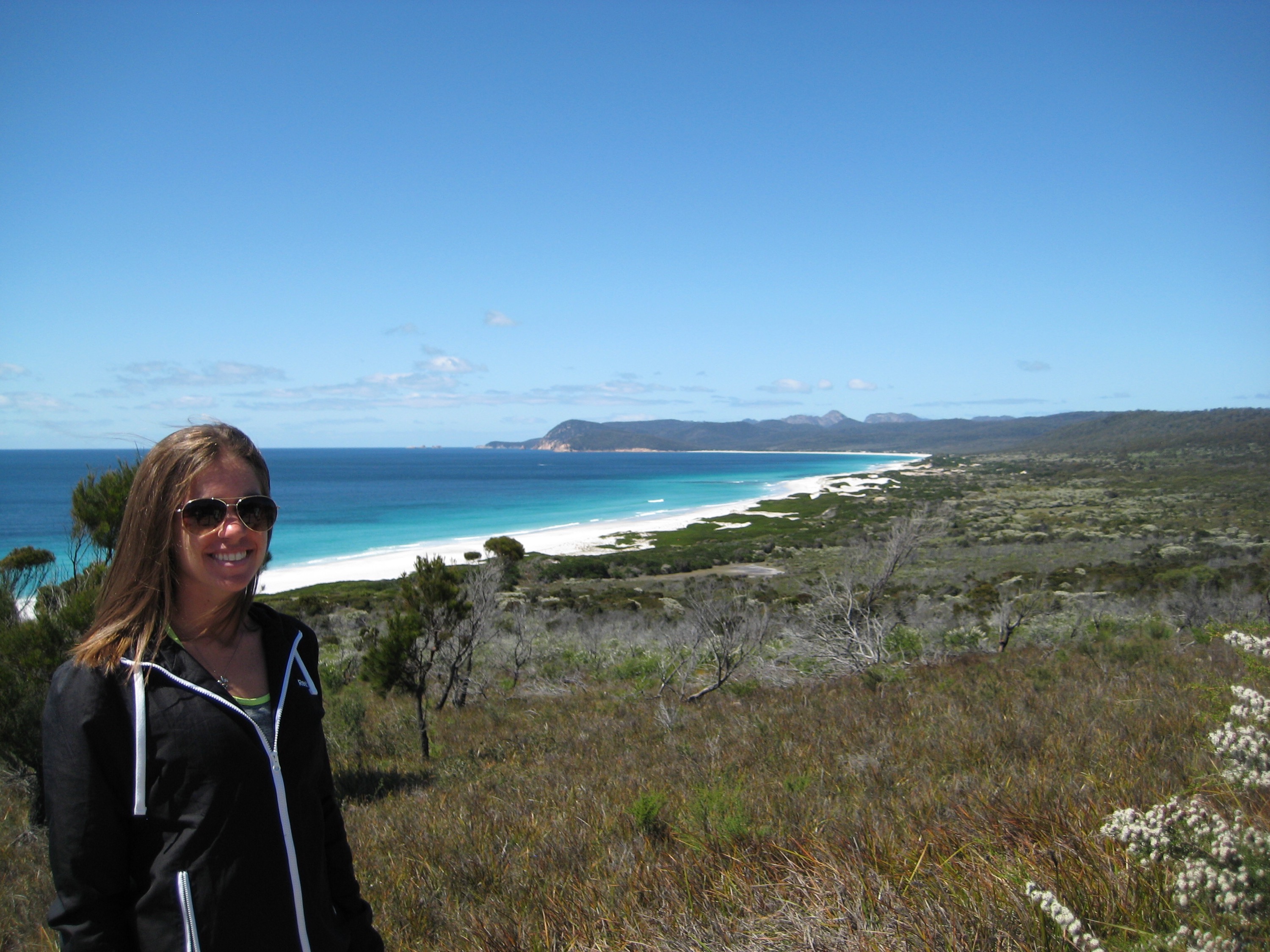
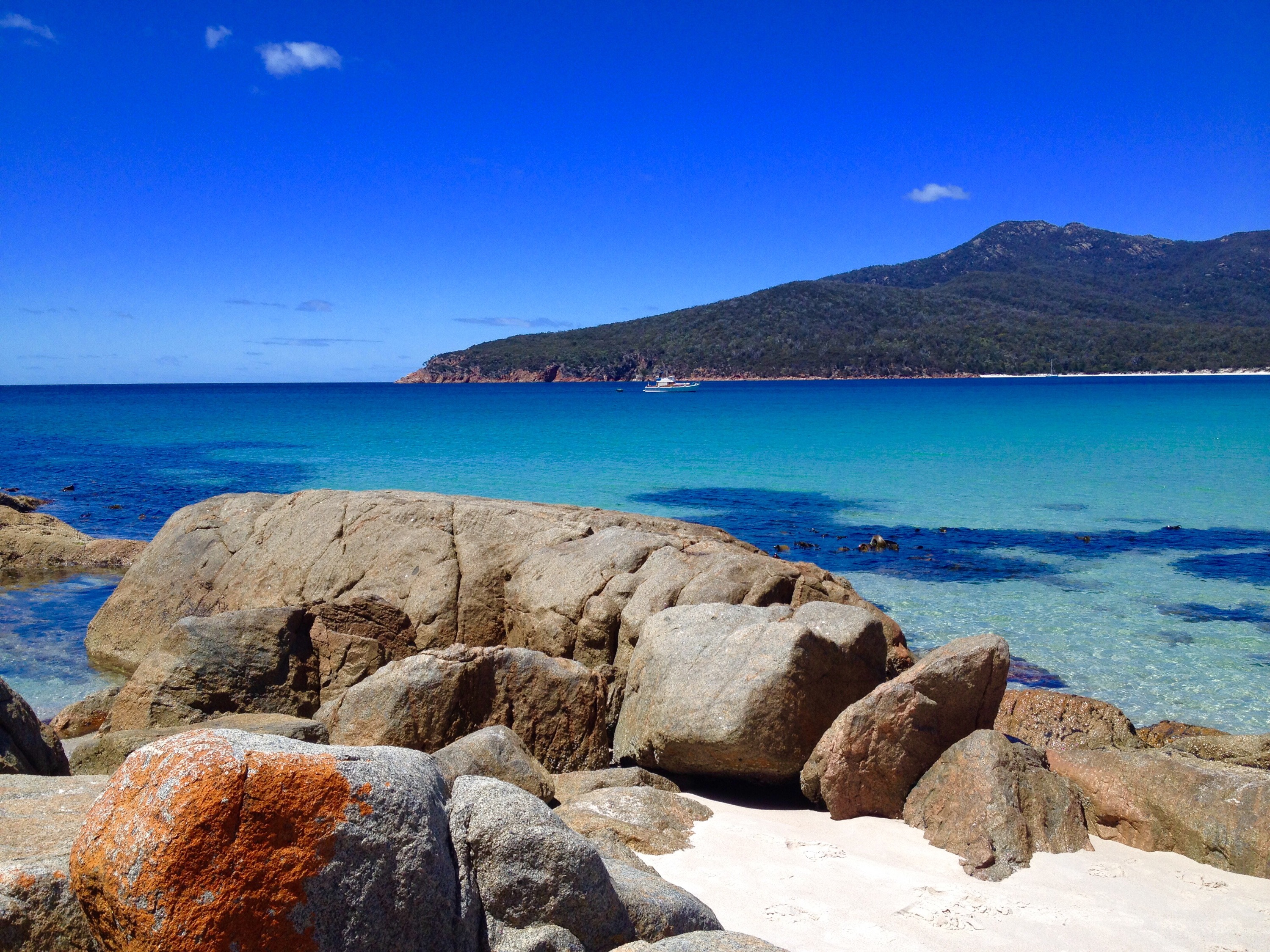
Easily my best day in Tasmania with a visit to one of my favorite beaches in the world. The day began with a drive across the island state to the eastern coast, jumping onto the Great Eastern Drive with beautiful coastal views and white sand beaches. Our first stop was at a lookout with a glorious view of the miles of inviting white sugar sand beach, aptly named the Friendly Beaches.
As we continued on to Freycinet (pronounced Fray-chen-ay) National Park, my excitement grew. I’ve been browsing and liking photos of Wineglass Bay for months now and the anticipation was almost too much to stand! A beautiful, isolated beach with the word “wine” in its name? Where do I sign up?!
Upon arrival into the park, our tour guide hit us with the reality of our time constraints. He explained that many visitors only make it as far as the lookout due to time restrictions. However, if you hiked quickly, you could make it down to the beach and back before we had to meet up again. I know I am a fast walker but this man had me all stressed out. How could I come this far and NOT feel that gorgeous, glistening white sand squeaking between my toes? I had to get down there.
The hike down to the beach is advertised as about a 1 hour walk from the parking lot to the sand; I did it in 40 minutes. I basically flew down to the beach and therefore had 45 minutes of pure beauty to savor. Upon first arrival, I noticed several tour groups down near the water, closest to me, with the rest of the beach essentially empty. A small boat floating in the bay. I kicked off my shoes and socks and began exploring, enjoying the warm sugar sand, dipping my toes into the chilly water, climbing on rocks, and searching for sea shells along the shore.
After taking multiple initial photos, I walked along the shoreline toward the opposite end of the beach. I found several more shells along with patches of seaweed, jellies, and crab claws; all virtually undisturbed. At this point, I was almost entirely alone on one of the world’s most beautiful beaches! Eventually I found a space in the sand to relax for a bit, listening to the water gently kissing the sand. I couldn’t have imagined a better moment.
My 45 minutes flew by and I soon had to begin my hike back up through the forest to our van. I’ve said it before and I’ll say it again, one week in Tasmania is simply not enough. Who wants to go back with me?! Till next time, Tassie!
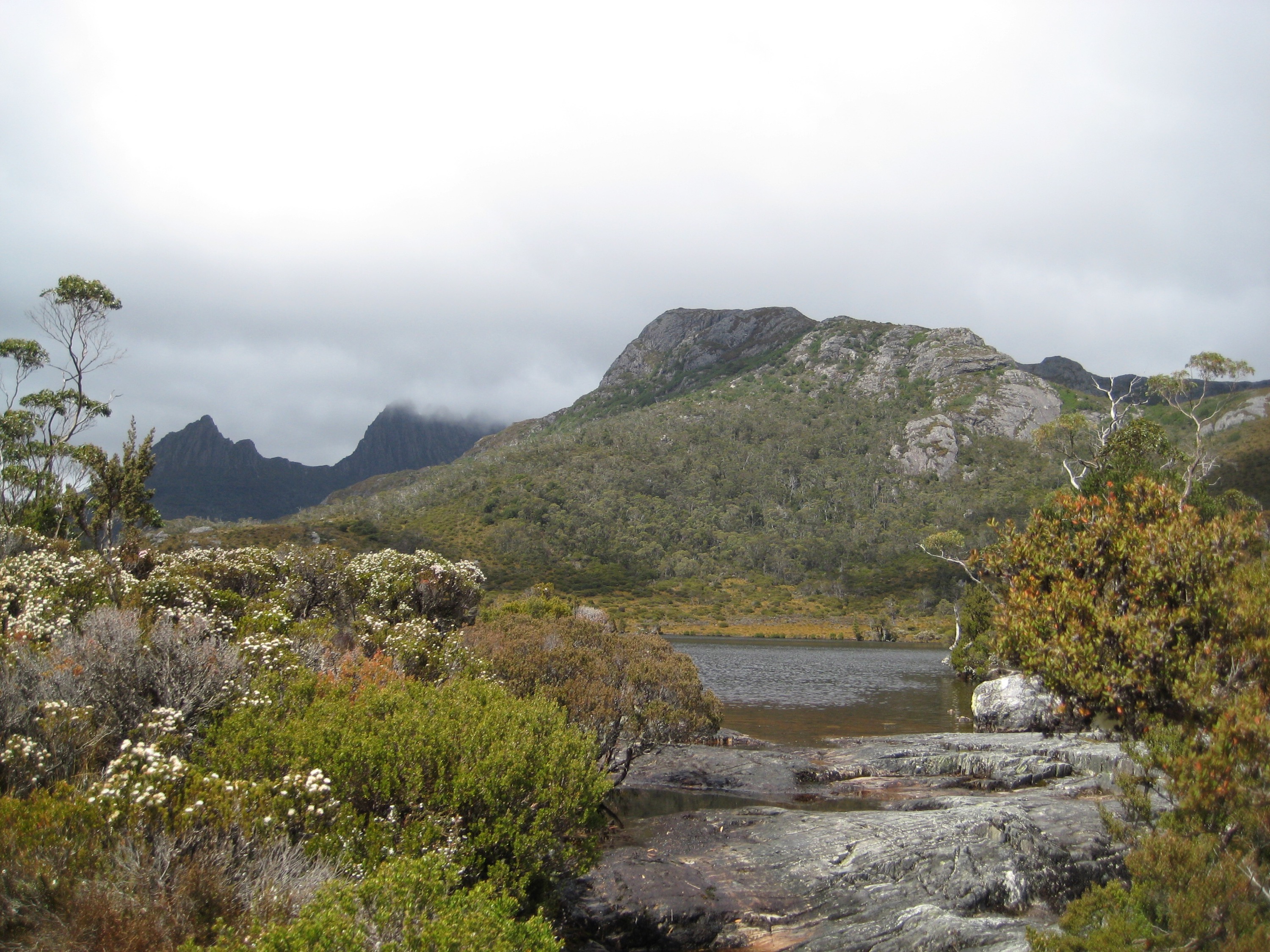
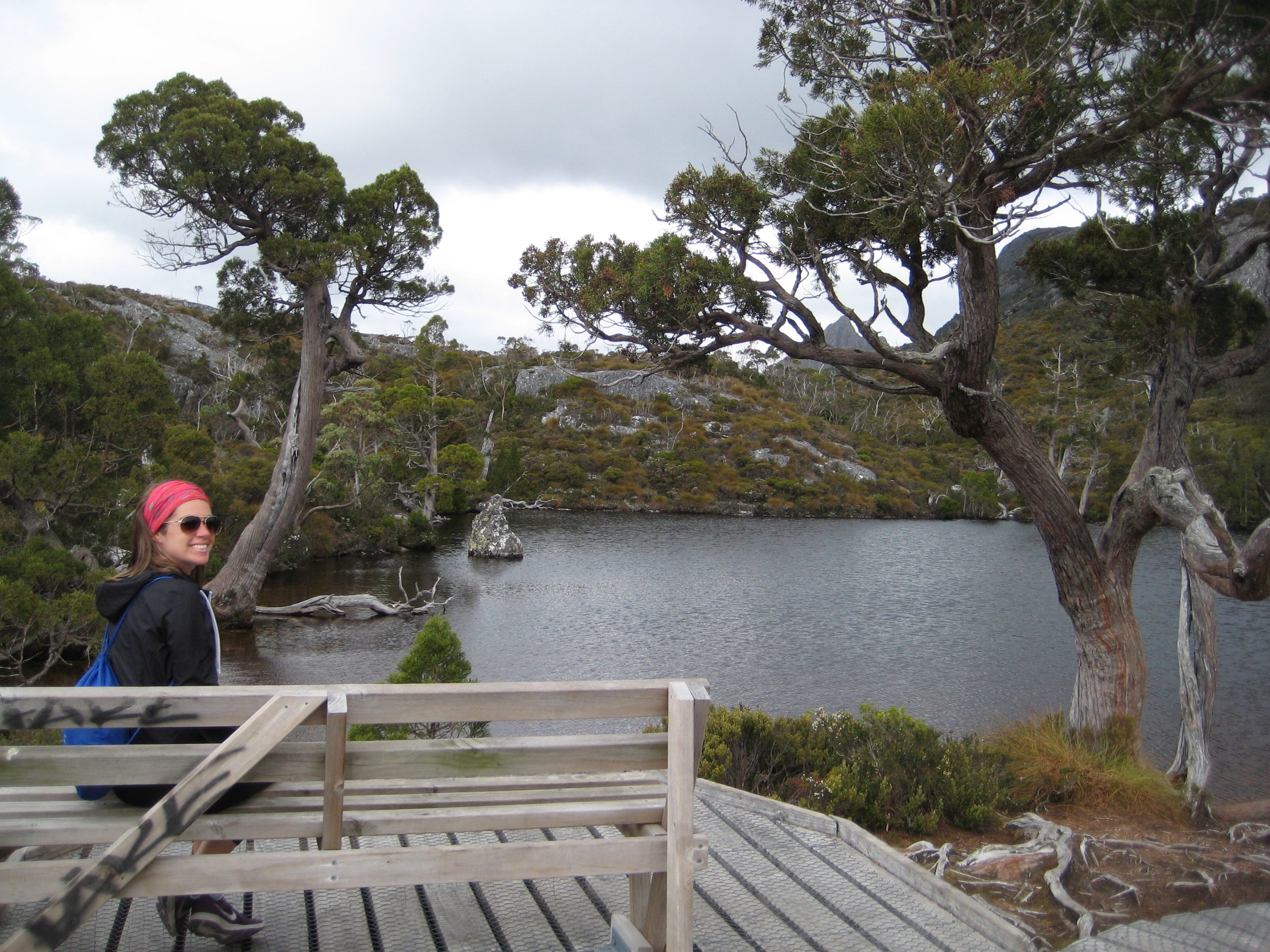
Cradle Mountain is Tasmania’s most visited national park, located on the western side of the island state. The complete opposite of Tassie’s eastern beaches and towns, the west receives about 300 days of rain; my day trip to Cradle Mountain was during one of its many rainy days. As with most mountainous regions, there is a tendency for rapid changes in temperature and weather conditions. While it rained on and off for the entire day, the weather shifted from cold and windy to sunny and warm multiple times. I was unprepared for the dramatic weather shifts and was grateful my tour company brought extra jackets to use.
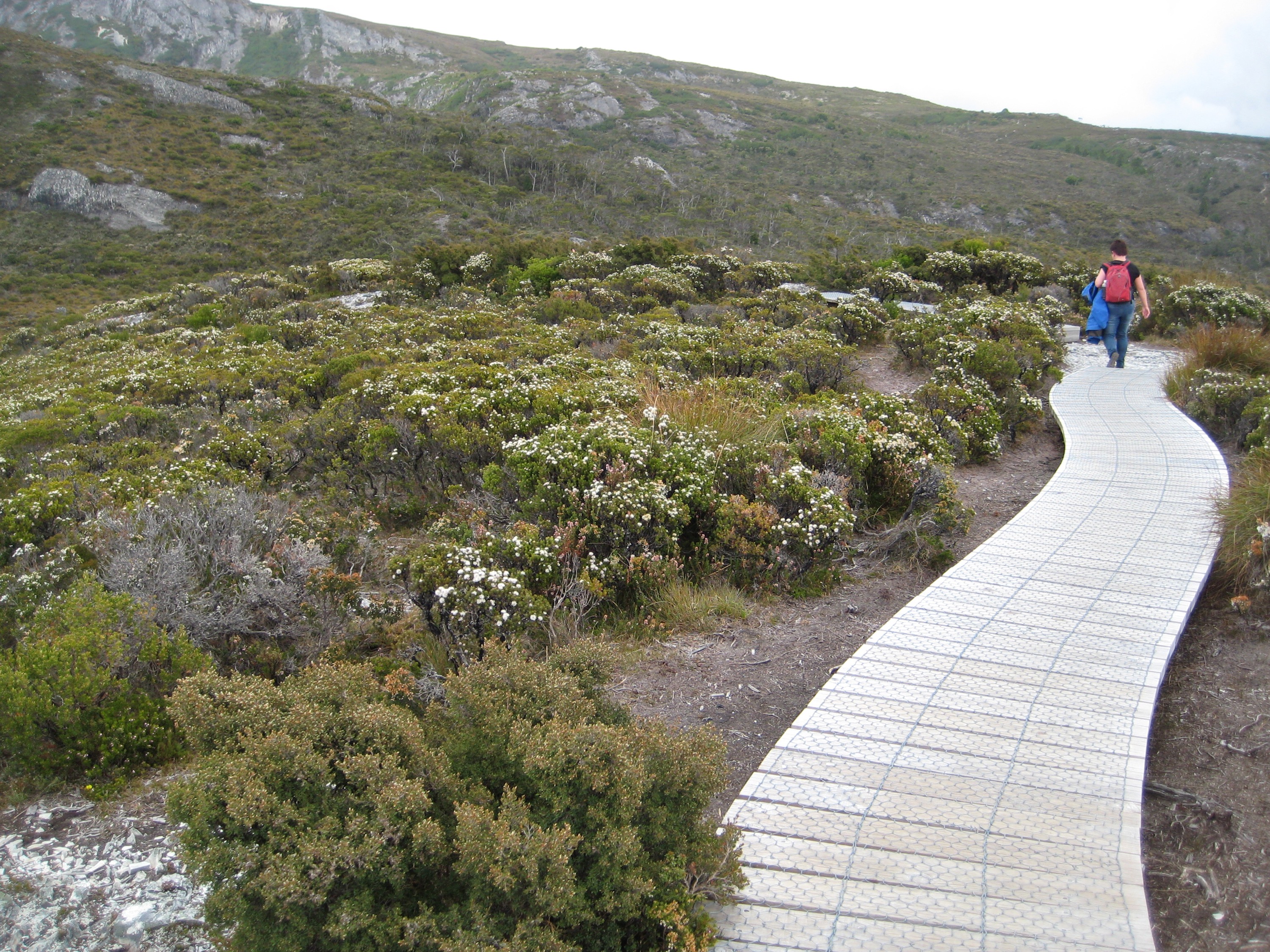
Cradle Mountain is a protected park with rolling hills golden in color, deep valleys, silky smooth lakes, and rugged mountain peaks. The park features several hikes and walks of varying difficulty levels. Cradle Mountain is also the start to Tassie’s famous Overland Track, a 6-8 day hike that has become a rite of passage for experienced hikers. Cradle Mountain is home to unique wildlife, including my new favorite animal, the wombat. Unfortunately I didn’t see one on this day trip but have heard they’re incredibly friendly, even in the wild, allowing many visitors to pat them as if they were a pet.
My tour took our group into the heart of the park with the option to take the walking track around Dove Lake or complete the moderately challenging hike up to Marion’s lookout. Guess which one I selected… The hike was a climb of 1,200m up to a beautiful lookout over the mountains, lakes, and valleys. The trail proved to be difficult at times, with some steeper areas being lined with a chain to grab hold while climbing up and down the mountain. Well worth the view and feeling of success, the hike took about 2 hours in the rain, wind and occasional rays of sun to complete.
I wish I had more time in the park to traverse the other hiking trails and explore the mountains; one of the downsides to booking a day tour. Cradle Mountain is a must-see for any Tassie traveler offering glorious views, hiking adventures, and historic stories about the people who made the park what it is today.
My trip to Tasmania was booked before I even stepped foot in Australia. I’d been following several stunning Tasmanian Instagram accounts and reading about the natural beauty and terrific food movement in the island state long enough to know that I would be visiting. Without knowing much about actually traveling through Tassie, I booked a 6-day adventure from Sydney to Launceston and decided to sort out the details later. And now, as my brief #TassieTrip is winding down, I am realizing I should have stayed longer (and rented a car!).
Although my time in Tassie has flown by, I packed my days full of activities. With all that I’ve seen and done in Tasmania, I’ve chosen to break up my chronicling into three posts: Launceston & Hobart, Cradle Mountain, and Wineglass Bay. Three of my six days were planned via Tours Tasmania, a tour company which offers day trips as well as a combined three day tour to The a Big 3 (Cradle, Wineglass, Port Arthur). I booked the Big 3 for $360 AUD in total and experienced three very different days as well as viewed much of the state while en route to and from our destinations. It is a decision I will easily recommend to a fellow traveler, particularly one traveling solo like myself, as it is expensive to rent a car in Tasmania.
Tasmania is a truly beautiful state with much to offer. Although it makes up only about 2% of Australia’s landmass, Tassie’s ideal farming lands, unique plant and animal life, and varying geographical features are much more significant. For starters, Tassie contributes about 50% of Australia’s mountain ranges and, with large opium farms, accounts for 48% of the world’s medicine production.
Tasmania is mostly rural, with over half of the state’s population living in the two major cities of Hobart and Launceston. Driving through Tasmania provides beautiful views of its rolling hills, green acres filled with sheep, cows and horses grazing freely, and the occasional road sign for kangaroos and the iconic Tasmanian devils.
My travels led me through numerous small towns filled with dull-colored homes to blend in with their natural surroundings, and populations ranging from 400-1,000. These smaller towns are also trying to catch the eye of the 1 million annual visitors each year with potential draws such as town mural competitions and topiary collections. It’s difficult to compete with all the natural beauty of Tasmania but they’re trying.
Australia’s oldest bridge, located in Richmond and erected in 1823
Launceston
Australia’s third oldest city, Launceston lies along the Tamar River in the north-central part of the state. Launceston is a quiet port city with a few big draws: Cataract Gorge, Boags Brewery, and the beginning of the Tamar Valley wine region.
Cataract Gorge: Probably Launceston’s best attraction, this natural reserve offers walking and hiking trails, the world’s longest single span chairlift, a swimming pool, dams, and a suspension bridge named Alexandra (!). It’s incredibly peaceful in here and a short walk from city center. The walk to the First Basin takes about 45 minutes and is generally accessible for all ages. From here, there are options to continue on to more challenging and longer hikes, indulge in the cafe, jump in the public swimming pool, relax on the grassy knoll, or experience the chair lift ride across the basin.
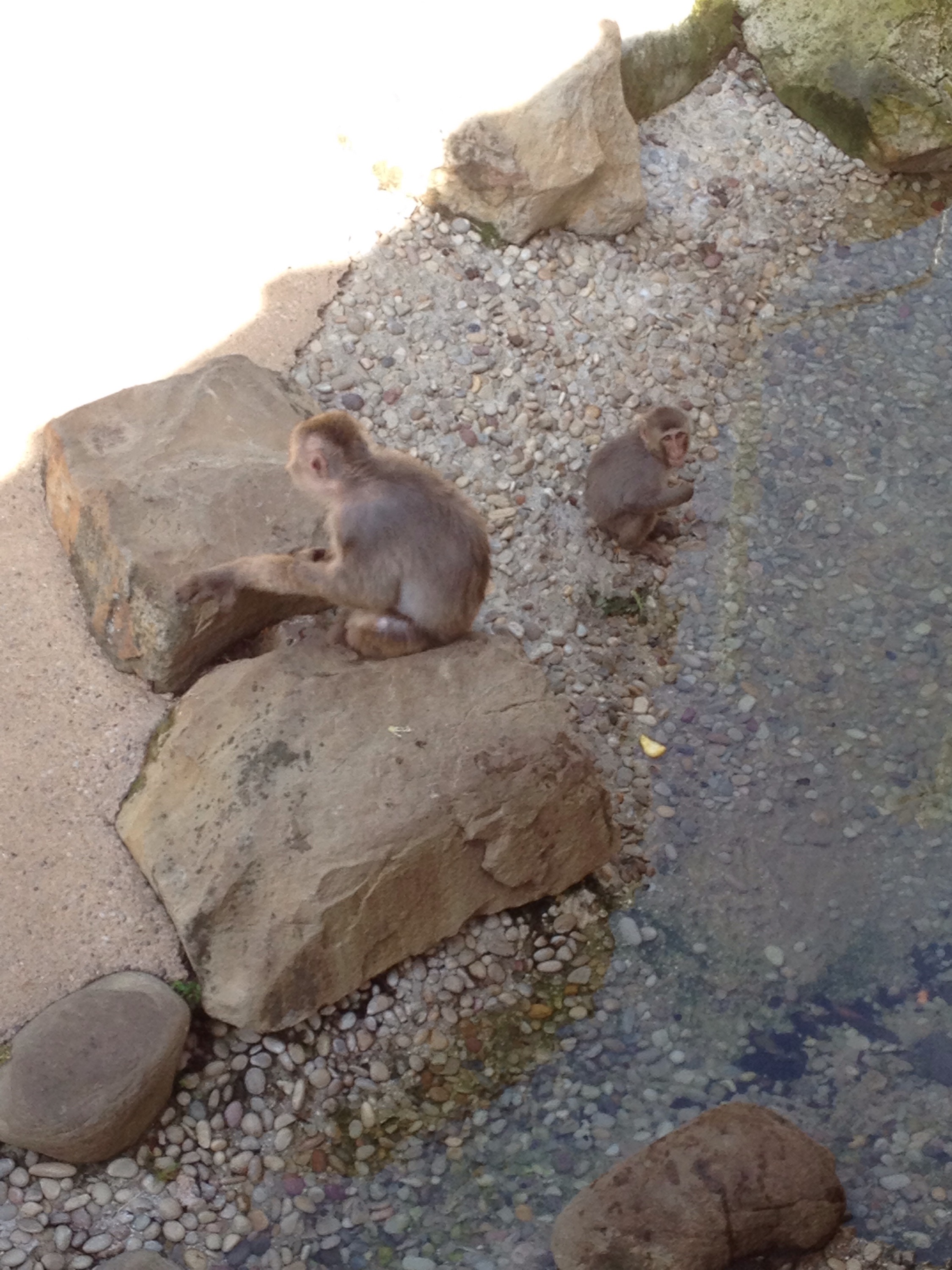
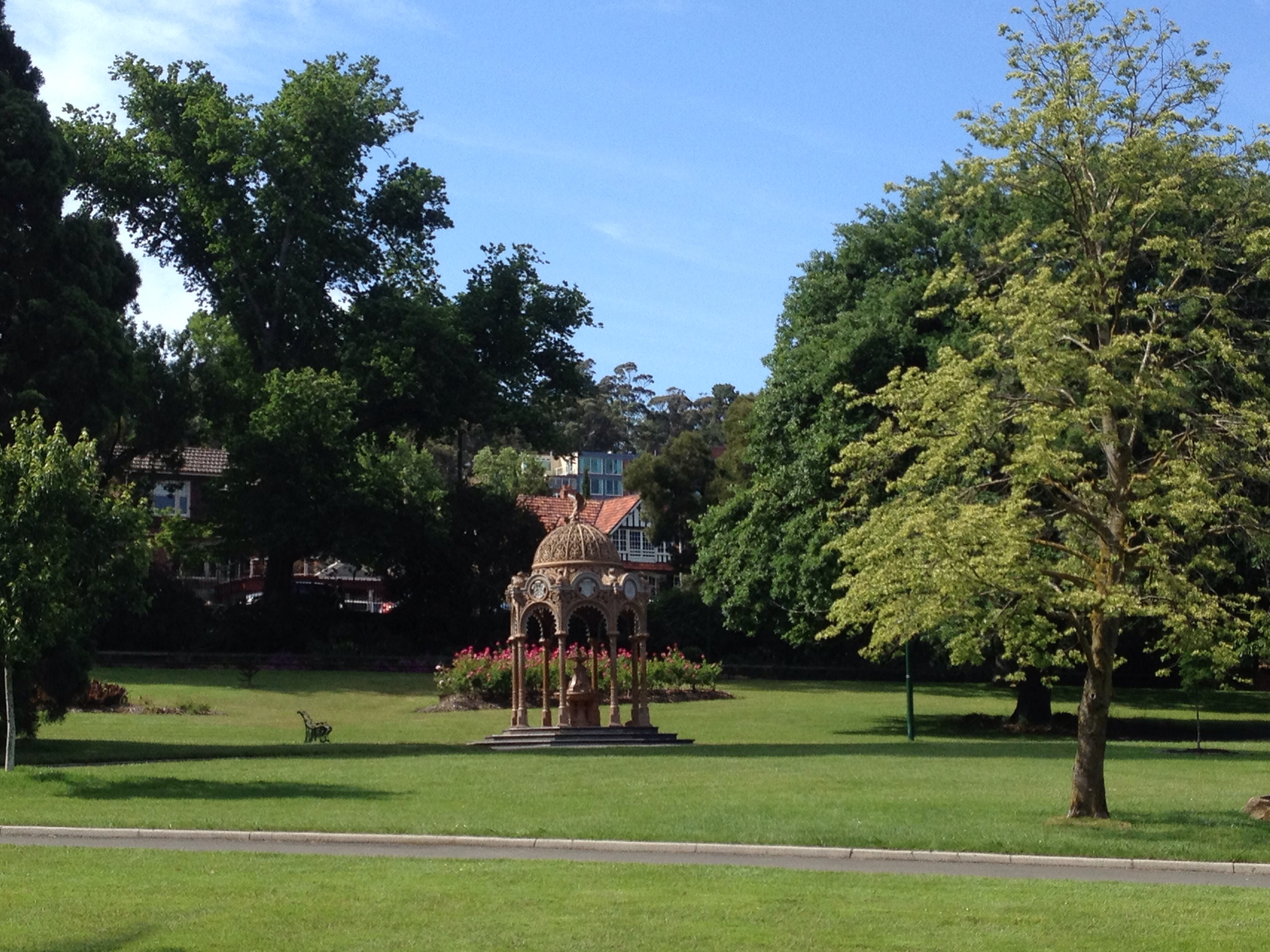
City Park: An oasis within the city, City Park was once the site for the home of Launceston’s first Governor. Today it is home to a different beast, Japanese Macaque Monkeys. Set up near the main entrance of the park, these monkeys can hold your interest for hours. Well, maybe not hours, but it is certainly interesting and almost eery watching these guys interact with one another, strikingly similar to the way we as humans interact. I stood and observed them for a while before peeling myself away to check out the rest of the park. City Park is the perfect city refuge; peaceful and quiet with only the sounds of wind passing through the trees. The park is well-manicured and also features a conservatory filled with green and purple ferns, orchids, and hanging moss.
James Boags’ Brewery Tour: Tasmania is known for some of the purest water and cleanest air in the world, ingredients which are also useful when brewing beer. Established by a farthest and son duo in 1881, James Boag’s beer is popular among the locals. The brewery offers 90-minute tours around the facility, observing everything from the brewing tanks to the bottling lines. The tour concludes with a tasting of their beer and some cheese pairings to go with it. Recently spoiled by the exciting craft beer movement in the U.S., I was a little bored with the limited selection and classic flavors, although, to their credit, they certainly brew up some crisp and clean tasting beer.
Tamar Valley
Located along the Tamar River, just north of Launceston, is the Tamar Valley Wine Region, a top destination on my Tassie bucket list. I booked a half day wine tour to visit five of the boutique vineyards and sample their dry, cool climate wines at the cellar doors. One of the things I love about wine tasting in Oz is that the vineyards are very generous with their tastings. If a vineyard produces 15 types of red and white wines, you can try all 15 wines! Pacing is important in this setting!
Pinot Noir is the most popular wine of Tamar region, with Pinot Gris becoming increasingly popular as well. The vineyards produce everything from Chardonnay to Cabs and Merlot, with many also offering dessert wines and ciders as well. Each vineyard featured beautiful valley views as well as selections of local cheeses and fudge.
Hobart
Australia’s second oldest city, Hobart is a seafood mecca with their harbor serving as the main focal point for the port city, the harbor with Mt Wellington as its glorious backdrop that is. Hobart is a bit more hip and lively compared to Launceston and serves as the gateway to many of the top tourist attractions including Wineglass Bay, Port Arthur, Richmond, and Bruny Island. I spent a day wandering Hobart’s streets, exploring the shops, and enjoying the fresh local ingredients featured in many of the restaurants and cafes.
Hobart’s main focal point with Mt Wellington as its backdrop
Salamanca Square: The setting for the increasingly popular Salamanca Markets every Saturday morning, the square is filled with crowded bars, specialty shops, and enticing restaurants. Definitely the place to go for after dinner drinks or an evening out with friends.
Battery Point: Hobart’s oldest neighborhood, filled with colonial homes dating back to the 1800s. There’s a small stretch of restaurants and shops here but it’s mostly interesting to walk around admiring the Georgian architecture of the neighborhood.
Port Arthur
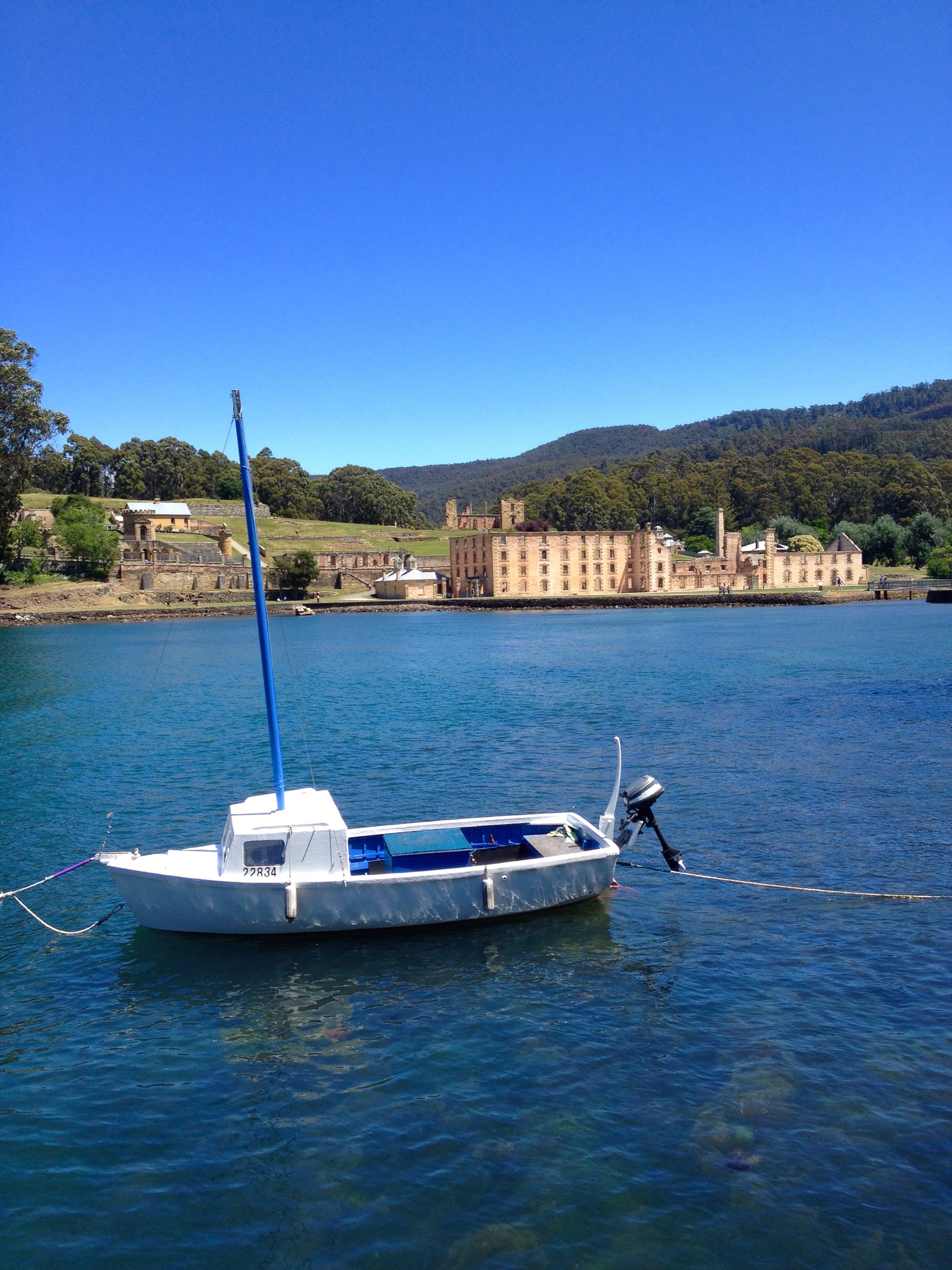
My third and final day trip was to the historical colony of Port Arthur, the penal community for Australia’s repeat offenders. While it wasn’t my favorite of the three trips, I left with a lot of questions and thoughts swirling in my mind. Most of my bus ride back to Hobart was spent writing questions down to reflect upon later and share here.
Port Arthur is a beautiful community with colonial buildings, homes, and gardens. Perhaps the convicts did not see it the same way I did but there certainly are worse places to serve out a sentence or two.
Historians have done a great job preserving what’s left, restoring many buildings that were damaged by bush fires, and telling the individual stories of the men who served time there. Upon entry, you are handed a playing card which represents a particular convict. Visitors are instructed to use the card to find your way through an exhibit, unlocking the story of your convict and learning of their crimes, punishment, and sentence. I appreciated this “game” as it gave you a person to connect with, making their story come alive rather than only learning a few general and basic facts about life in Port Arthur.
Although only open from the 1830s to the 1870s, Port Arthur was significant for many reasons. One of which was the lasting contribution the convicts made in Australia, building everything from ships to roads and bridges. Port Arthur was also the first site in the world for a juvenile detention center. Boys as young as 9 could have been sentenced to time in Port Arthur. Officials decided to separate the boys from the influential men by sending them to a separate island across the harbor.
Additionally, Port Arthur tragically experienced a mass murder in 1996 when a man went on a killing spree both at the historic site and a nearby restaurant, murdering 35 people and injuring many more. This event was a tremendous shock to the quiet community and peaceful Tasmania as a whole. As a result, the Australian government responded by tightening their gun laws, making it difficult to obtain a gun at all. Today Australia continues to be a country with limited gun violence, unlike my homeland…
These three things struck a chord with me and promoted my afternoon of questioning and interest in discussion. I’m including some of my thinking below and would be interested in discussing, should any of you fellow readers be willing to engage.
On the topic of convicts learning skills and trades: Why don’t we put convicts to work these days repairing roads, building, learning trades? We spend money on them rather than make money off them. Sure, prisoners can go to “school” or work the odd jobs in prison, but they don’t seem to be as valuable to society as they once were. When did this practice change and why?
On the topic of juvenile detention: How did our juvenile detention system become what it is today? Started by the Brits in the beautiful setting of Port Arthur, younger convicts (who were convicted for lesser crimes like petty theft) were educated in their penitentiary with the intention of re-assimilating into society as productive citizens. What is our focus now? Is it successful? Productive? Are we actually protecting them for their adult influences outside of prison by keeping them there?
On the topic of gun control: In 1996 a gun massacre took place here in Port Arthur. 35 people were killed in this quiet and peaceful part of Tasmania (characteristics of all of Tassie, really). Australia responded by tightening gun laws, taking guns away from citizens, making them difficult to obtain. The U.S. and Australia have similar histories, both coming from British rule, and yet America struggles to manage its gun problem. People have become almost numb to this type of crime in our country and the government continues to spout empty words about how we have to do something each time it happens again. What will it take to make a change? Do people really need guns? Access to them? We aren’t in colonial times anymore where a gun with hand-packed gun powder. We are no longer in those times and yet we keep our rules the same. Does the constitution actually adapt with our country or do we continue to be held back because of it? If it’s a living document, it can change. If we can make rulings in favor of something like black rights, women’s rights and gay marriage – all of which were unconstitutional during colonial times – why is gun control so difficult to interpret according to the needs of our time?
I don’t expect to find all the answers but my trip did get me thinking, enough so to share here. While these are heavy questions, they did not damper my day. Port Arthur is well worth the visit and deserves at least a full day to appreciate and explore.
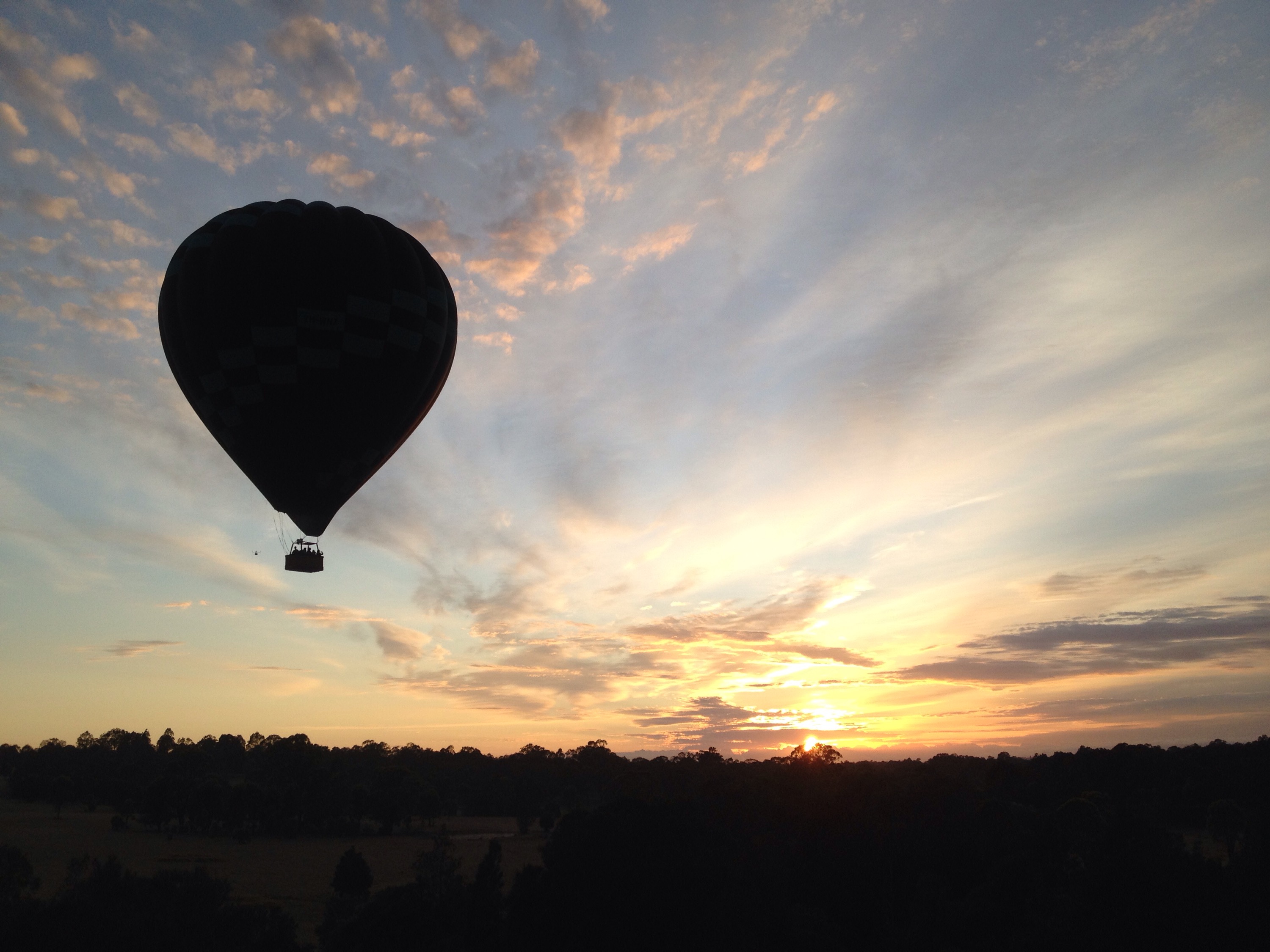
Beautiful early morning sunrise over Hunter Valley (and a fellow hot air balloon next to us!)
The alarm sounds at exactly 4:15am, those dreaded chimes ringing in my ear. I roll out of bed, momentarily confused as to why I’m being forced awake at this hour. It’s still dark outside and there’s a chill in this Hunter Valley pre-dawn air. After breaking free of my sleepy haze, I realize I’m about to check off an all-time activity on my bucket list, one that I’ve been looking forward to since I was a child; flying in a hot air balloon!
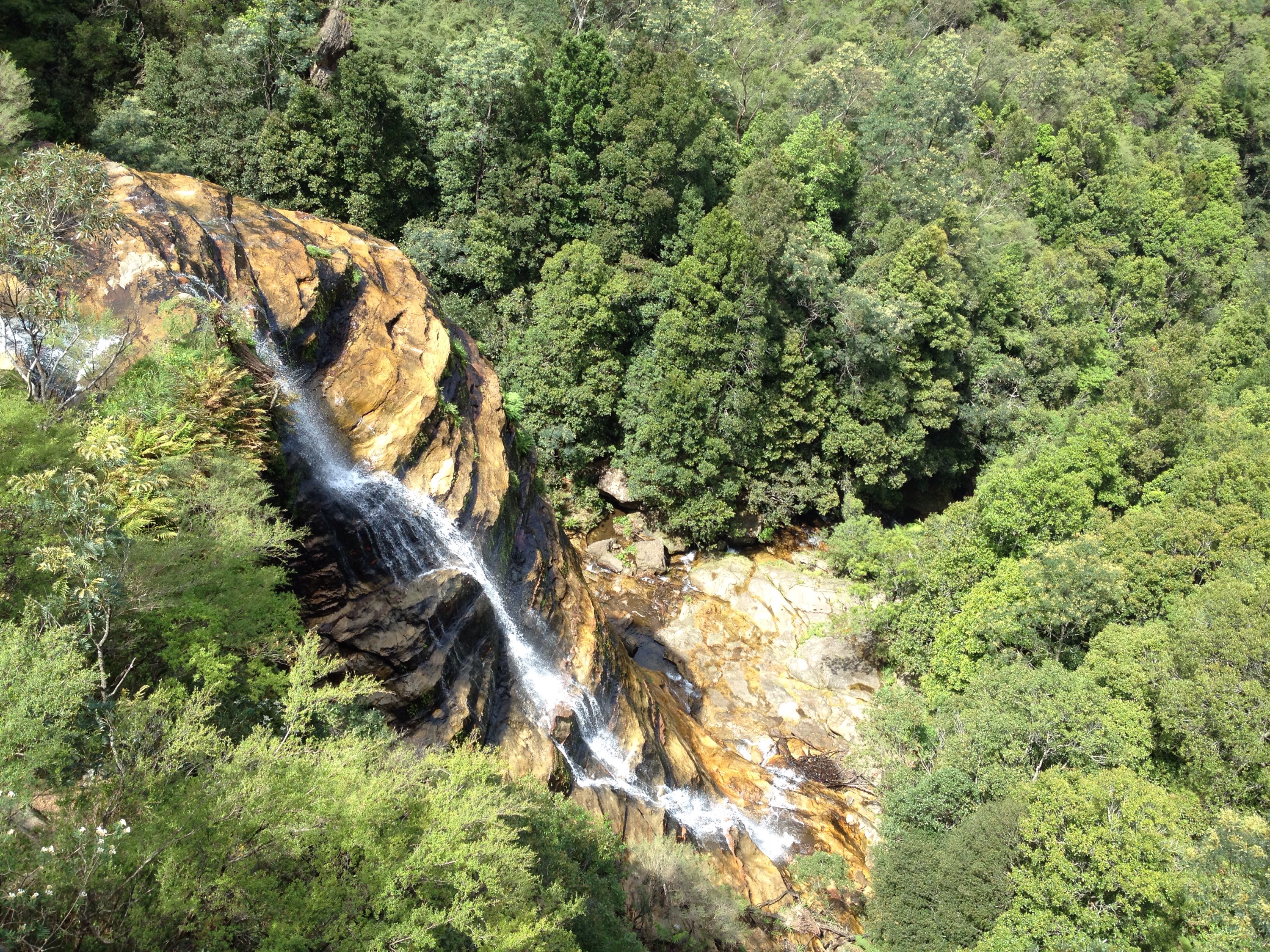
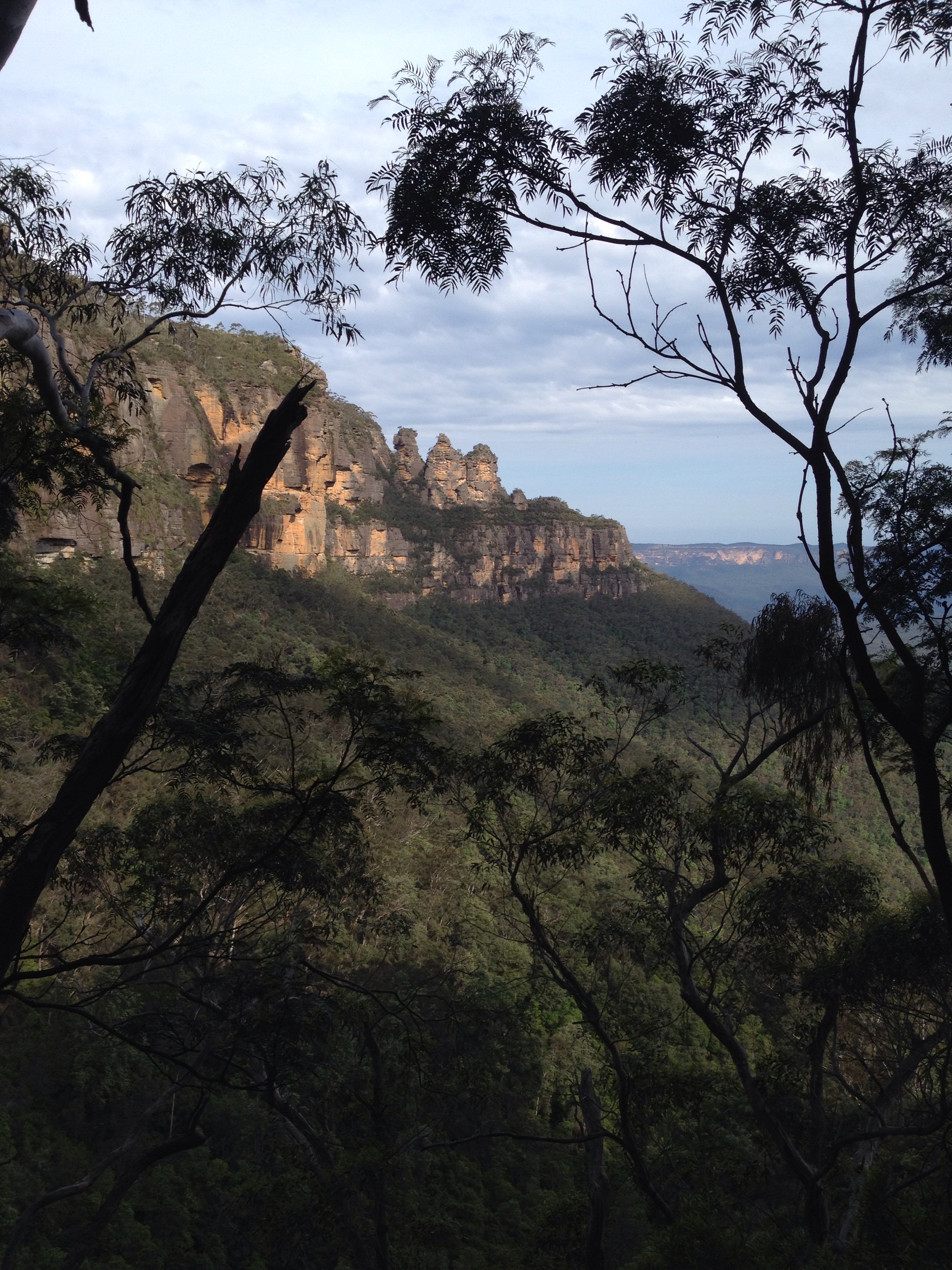
Located a mere two-hours west of Sydney, an oasis of rolling green and natural beauty awaits. A World Heritage site since 2000, the Blue Mountains offers a welcomed escape from the busy city life. The air is crisp, the birds are playful, and the sunlight breaks through the towering trees at perfect angles.
Traveling via train from Sydney to Katoomba, you know you’ve arrived when the train windows are filled with views of the hazy blue mountain tops and charmed green valleys. Armed with water, sunscreen, a rain jacket, and granola bars, my friend and I exited the train and walked straight into the Trolley Shop to purchase a one day pass on the hop on-hop off trolley. Featuring 29 stops in total, the trolley takes passengers around the mountain towns of Leura and Katoomba and features hikes through Gordon Falls, the Prince Henry Cliff Walk, and Echo Point.
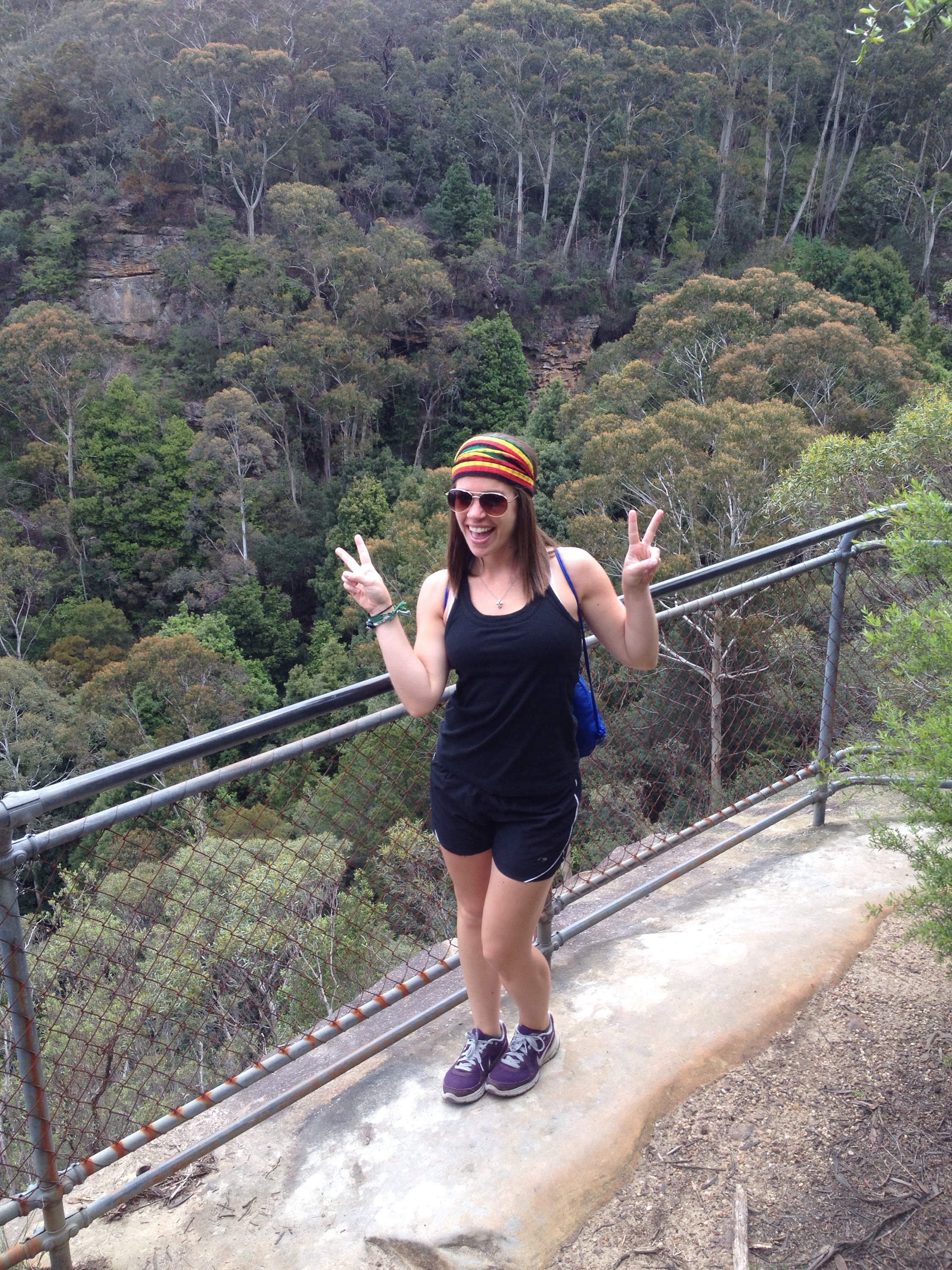
We chose to hop-off after passing through the small, picturesque town of Leura, beginning our hike in Gordon Falls. Our hike took us through the winding mountain trails, many with steps carefully carved out of the cliff side rocks. We hiked over five hours in total, crossing through the Prince Henry Cliff Walk and down the Giant Stairway, descending 800+ steel and stone steps into Scenic World. Featuring a cable car and skyway, Scenic World is the quickest way out of the valley, offering unique views of the region. Determined to finish the hike, my friend and I completed our adventure via the steep Ferber Steps, a track that’s suggested for travelers who love a challenge. Each of the trails are marked with suggested times, distance, and grading; the steps were deemed “hard”. Needless to stay, we were exhausted by the end, exhausted, grateful, and proud.
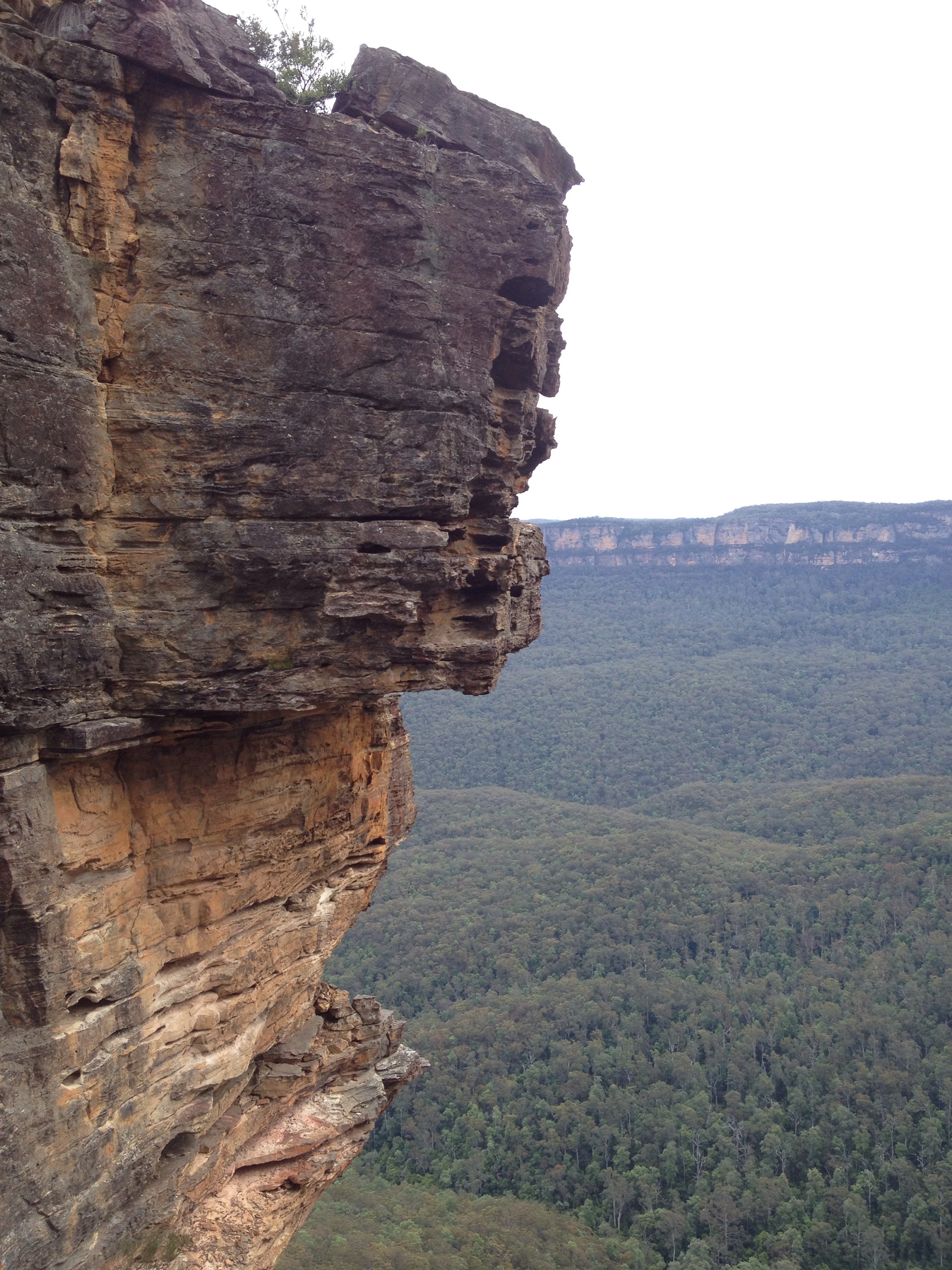
Katoomba offers many of the famous Blue Mountain sights and is one that can be done without a guide. Another ideal hiking site, Wentworth Falls, is located a few small towns away. While close in distance, Wentworth Falls feels different from Katoomba, offering winding paths through cascading water falls, canyons, creeks and pools. Here hikers will find the National Pass Walk, Queen Victoria Lookout, and my personal favorite, Pulpit Rock. Similar to Katoomba, the trails of Wentworth Falls are clearly marked, wind in and around the cliffs, and greet visitors with breathtaking views of the mountain range.
Regardless of whether you travel with a guide or plan your own exploration, the Blue Mountains charms visitors with gorgeous views, numerous lookout spots, wildlife encounters (hello cockatoos, parrots, bush turkey, and wallabies!), and a tranquil place to escape the city.
No sickness can keep me from embracing UK stereotypes of Australians!
“I think the Gators made me sick,” I told my new friend. “Sorry – who are the Gators?” Ugh. Sometimes it’s difficult living abroad. For one, your new friends are not usually the kind of friends you can share the typical banter from home. These new friends also come with a new set of international germs and with that, the possibility of becoming ill. I have lived in Sydney for a month now and have been sick twice within that month. Illness is another difficulty while living abroad. Without your typical routines, eating habits, germs, and doctors around, it can be challenging to know what to do when sickness strikes.
This Wednesday marks three weeks in Oz! I’ve explored much of Sydney, viewing the city through the eyes of a tourist, and am now transitioning into life as a temporary citizen. There’s a lot to sort out including a bank account, tax number, employment, and apartment. I’ve been chipping away at the list each day.
Tax File Number
Every employed Australian is issued a Tax File Number (TFN) which is used to report employment and income to the Australian government. For a temporary citizen like myself, the way to obtain a TFN is through a free online application. Once completed, the actual number is mailed within a month. It is possible to gain employment without a TFN, but reporting employment through the TFN is the only way to receive a tax refund at the end of the fiscal year. The TFN is essentially Australia’s social security number, only less complicated.
I’ve found that many employers, particularly in hospitality, will offer to pay cash rather than have the income “on the books”. According to the Australian government, this is illegal, but cash payment is common.
Australian Bank Account
Commonwealth, Westpac, and ANZ banks are the most common here in Sydney. All three banks offer similar checking account options and, after a few specific recommendations, I chose Commonwealth. This bank is popular with their extensive network of ATMs and branches around Australia. The bank also has excellent online banking options with an app that allows customers to withdraw money from their ATMs without the bank card.
The only downside (dark side?) is the account fee of $4/month. The fee is waived if you deposit $2,000 or more a month but I’m not sure I’ll be able to hit that mark regularly. I guess free checking isn’t a thing here. I didn’t realize how spoiled I was in the U.S. Without a permanent address, I had my bank card sent to the bank branch and picked it up 4 days later. The account still has a balance of $0 but that is a different story.
Cell Phones & an Australian Phone Number
Ah, the magical world of SIM cards, another topic I knew nothing about prior to arriving in Oz. Back in the States, people typically receive a new phone when beginning a service or a new contract. However, getting locked into a year+ contract with a cell phone company here in Australia was not an option for me.
Enter the SIM card, a backpacker’s best friend and the practical way for temporary citizens to get connected. All you need is an unlocked phone and a phone company of choice. I had AT&T unlock my iPhone before leaving the U.S. and simply purchased a SIM card in Australia. The SIM card itself cost $2 and I was able to purchase it at the grocery chain here, Woolworths. There are SIM cards available for purchase from all the major phone companies.
I selected a lesser known company called Amaysim based on a recommendation from a Sydney local. The company operates on the Optus network, a major carrier in Australia, and the data plan options are hard to beat. I have 5 gigs of data with unlimited talk and text in-country plus 100 international minutes a month for $45 AUD. Although I barely used a gig of data a month in the U.S., with the lack of wifi here, I knew my usage would dramatically increase. A few of my new friends purchased lesser plans with 2 or 3 gigs and blew through them in just over a week. The best thing about the SIM-only plans is they’re month to month with no lock-in contracts! Hard to beat!
Using American Electronics in Australia
Like any seasoned traveler, I knew to bring a power adapter, but what I didn’t know was how some of my electronics would react while connected to said adapter. Electronics in the U.S. operate on 120 volts while in Australia the voltage is 230V. Because of this, our electronics require both a power adapter and a voltage converter. Not realizing I needed both, I only brought a power adapter. It works with my basic electronic such as a phone charger but wasn’t as successful with my blow dryer.
One afternoon, after washing my hair, I plugged my blow dryer into the adapter and into the Australian outlet, and turned it on. I immediately heard a difference in the amount of power shooting through the dryer, a significantly louder than normal sound, much more furious. Moments later, an orange glow from inside the dryer caught my eye. The inside of my blow dryer was creating a fire! Thankfully I caught this quickly, switched it off, and unplugged it. It would have been an epically bad day if I had attempted to use the blow dryer with flames shooting out onto my head. Still not realizing the missing voltage converter piece, I carried the dryer around for a few more days, contemplated mailing it back home, and ultimately decided to throw it away. I picked up a cheap dryer from a local store instead – problem solved!
This wattage difference however has also been effecting my flat iron, just not as dramatically. I remember reading a travel article recommending leaving hair appliances at home and of course I didn’t listen. Mildly straight hair for a year? I think not! My flat iron turns on without catching fire but does not heat up as hot as it should. However, now that I know about the voltage converter, I am going to purchase one in hopes that my flat iron doesn’t suffer the slow electrical death I read about. To be continued…
Health Care
Sadly Americans do not have reciprocal health care in Australia the way most European countries do. Before arriving I scoured the internet looking for information about refilling prescriptions. I came up empty handed. I then jumped on the phone with World Nomads, my travel insurance provider, which was equally unhelpful. I realized that I was going to be the person to find out how to go about this and write about it on my blog.
Travelers can walk into any health clinic, schedule an appointment for approximately $75 and speak with a doctor about refilling prescriptions. The doctor I met with asked me a few questions about what I had been taking and for how long. One was a common medication in Australia while the other was matched with the Australian equivalent. I then walked immediately over to the local pharmacist to fill the prescriptions. I purchased a three month supply of each for $20. The doctor also gave me a refill and a copy of the prescription so I can refill it wherever and whenever I need.
This was significantly easier than I had imagined and would likely be near impossible and/or extremely expensive without insurance in the U.S. I am grateful for the simplicity of this process.
Living Out of a Suitcase
In three short weeks I have lived in four different neighborhoods and moved five times. Through this, I have accomplished my goal of learning more about various Sydney neighborhoods, and have also grown increasingly tired of living out of a suitcase. I’ve stayed in an equal share of AirBnB apartments and backpacker hostels, and am now in search of a short-term apartment to move into. I would ideally like to live near work but the search hasn’t been easy. Many people do not respond to my emails about their listing. I know something will work out, I’m just not sure when. For now, the hostel life it is!
Ciao for now! Did I tell you I’m trying to learn Spanish? Current life goals: learn Spanish and salsa dancing. I might be in the wrong country… 🙂
“They call it the ‘Bondi bubble'”, my AirBnB host explained. “Everything you need is right here. There are people who never leave.” As I continue my neighborhood exploration, I opted to spend a few nights living in Bondi because, why not? Bondi is a world famous destination for surfers and travelers alike, always on the must-see list for any visit to Sydney. While it’s unlikely I’ll choose to settle in Bondi, a handful of days in the beach community is exactly what I had in mind. Bondi has a few unique characteristics that make up the “bubble”, and are rather entertaining to witness. Here’s what I’ve learned so far.
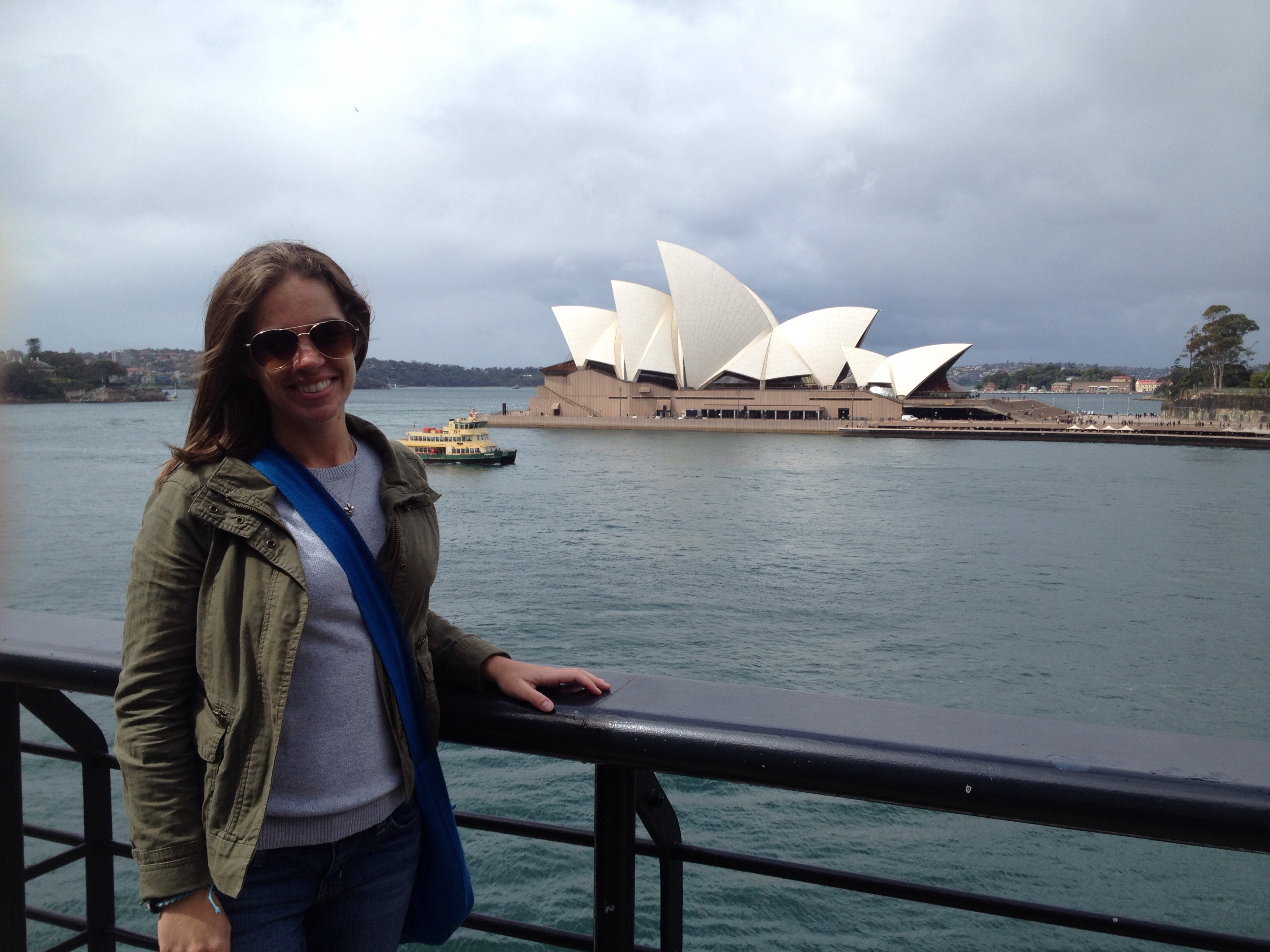
I’m here! After 9 months of planning, excitement, and anticipation, Ali is finally in OZ! It’s almost surreal–there are moments that feel like a dream. There is much to learn, see and do in my new home of Australia but, for now, I will share my initial impressions of Sydney. We all know first impressions are important and, after a week in Sydney, I’ve found a few notes worth sharing.
If you’re in Hawai’i and you haven’t seen a rainbow or heard someone greet you with “aloha”, you haven’t been paying attention. These two details are common characteristics of the islands and, after a brief four-day visit to paradise, I’ve learned there is a great deal more to life in Hawai’i.Continue reading “Hawai’i: Land of Alohas and Rainbows”